A game organizer design process should not feel like nesting boxes into a larger box. Discover our 5-stage FORGE process: Fit, Outline, Refine, Grind, and Equip.
A game organizer design process should not feel like nesting a bunch of boxes and trays into a larger box in the best way possible and hoping something organized results from this action.
A strong process is structured because the storage and accessibility problem is structured. Every component has dimensions, every box has limits, every game has its table dynamic and, finally: every player has their own habits. Materials, on the other hand, have tolerances.
Knightsmiths approaches the design in five stages, internally called FORGE.
Fit (Assessment)
Before anything gets drawn we sit with the game. Not the rulebook, the actual box. Every component gets measured, counted, and sorted the way it comes out during setup, not the way the publisher packed it. We also ask the uncomfortable questions: does the box need to be stored vertically on a shelf? Are the sleeved cards going in there, and which sleeves? Is there an expansion sitting on the wishlist that will need a home in six months?
Most of the failures we've seen in inserts, ours included, came from skipping this part or doing it in a hurry.
Outline (Design)
This is where the layout gets drafted in CAD. Trays, wells, finger cutouts, lids, all of it. We decide the material thickness early because 3 mm premium plywood and 3 mm MDF do not behave the same, and the joinery has to be designed for the one we're going to cut. The outline is also where we decide what stays on the table during play and what stays in the box. A tray that's beautiful inside the box but awkward to lift out with one hand is a bad tray.
Refine (Iteration)
We cut it. Then we load it with the real components and see what's wrong. Something is always wrong. A card stack that's 2 mm taller than the spec sheet said, a token well that's too tight for fat fingers, a lid that rattles. We fix it, cut again, load again. Two or three rounds is normal. Sometimes more. This stage doesn't end on a schedule; it ends when the fit is right.
Grind (Production)
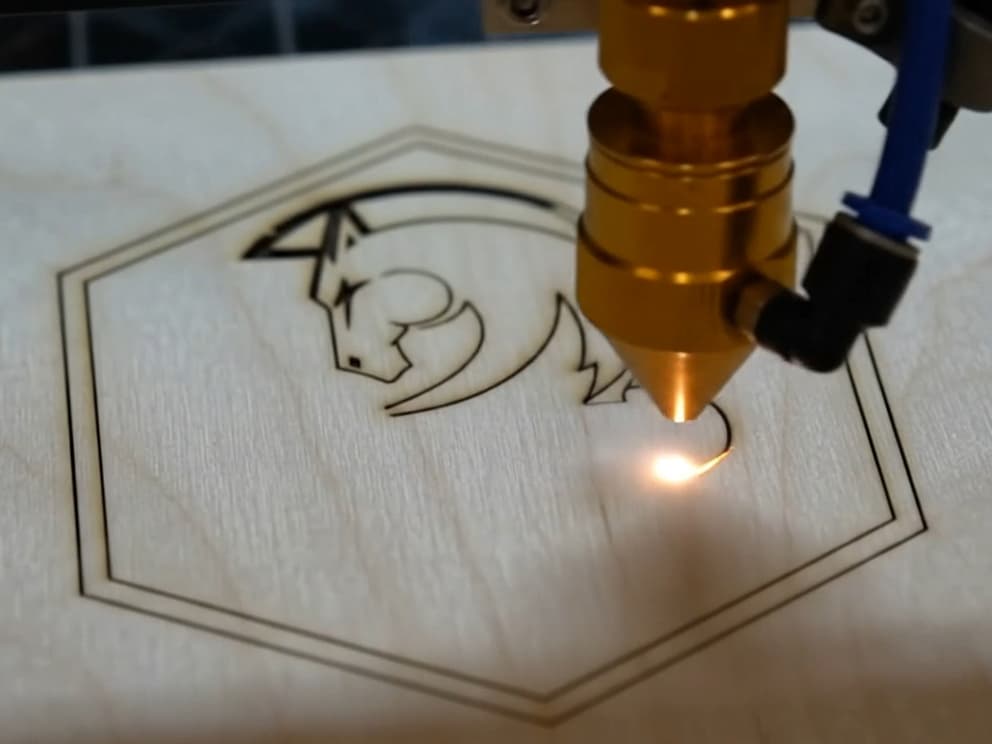
Sheets go through the laser, parts get sorted, edges get cleaned. It's the least glamorous stage and the one where discipline matters the most, because a small drift in the machine or the material batch shows up as a tray that doesn't quite close. We check parts against the approved prototype, not against the drawing.
Equip (Delivery)
Finishing, packing, and shipping. The goal here is simple: the next time you open that game, setup takes two minutes and everyone's reaching for what they need without asking where it is.
That's the whole process. Five stages, none of them clever on their own.
Why the Order Is Non-Negotiable
What makes it work is that the order doesn't get negotiated. When a project is running late the temptation is always to skip a round of Refine and go straight to the laser, and every time we've done that the customer ended up with a tray that almost fits. Almost is the worst outcome in this business. A missing insert is a known problem; an insert that's slightly wrong is a daily irritation that the player blames on themselves for a while and then on us.
The other thing FORGE does is force the design to be about the game, not about the wood. It would be easy to design inserts that look great in photos: tight tolerances, lots of little compartments, every token in its own well. Some of those are miserable to use at the table. Deciding in Fit how the game actually gets played, and checking in Refine that the trays come out with one hand while the other holds a drink, keeps us honest about who this thing is for.
We'll keep adjusting the process. Some games will break it in ways we haven't seen yet, and that's fine. But the shape of it — understand first, draw second, test until it's right, then produce, then hand it over ready to play — is not going to change.